Letter No. 64 · Wisdom & Philosophy · The Archive
The Single Antidote To Procrastination.
Christmas Is Always In December.
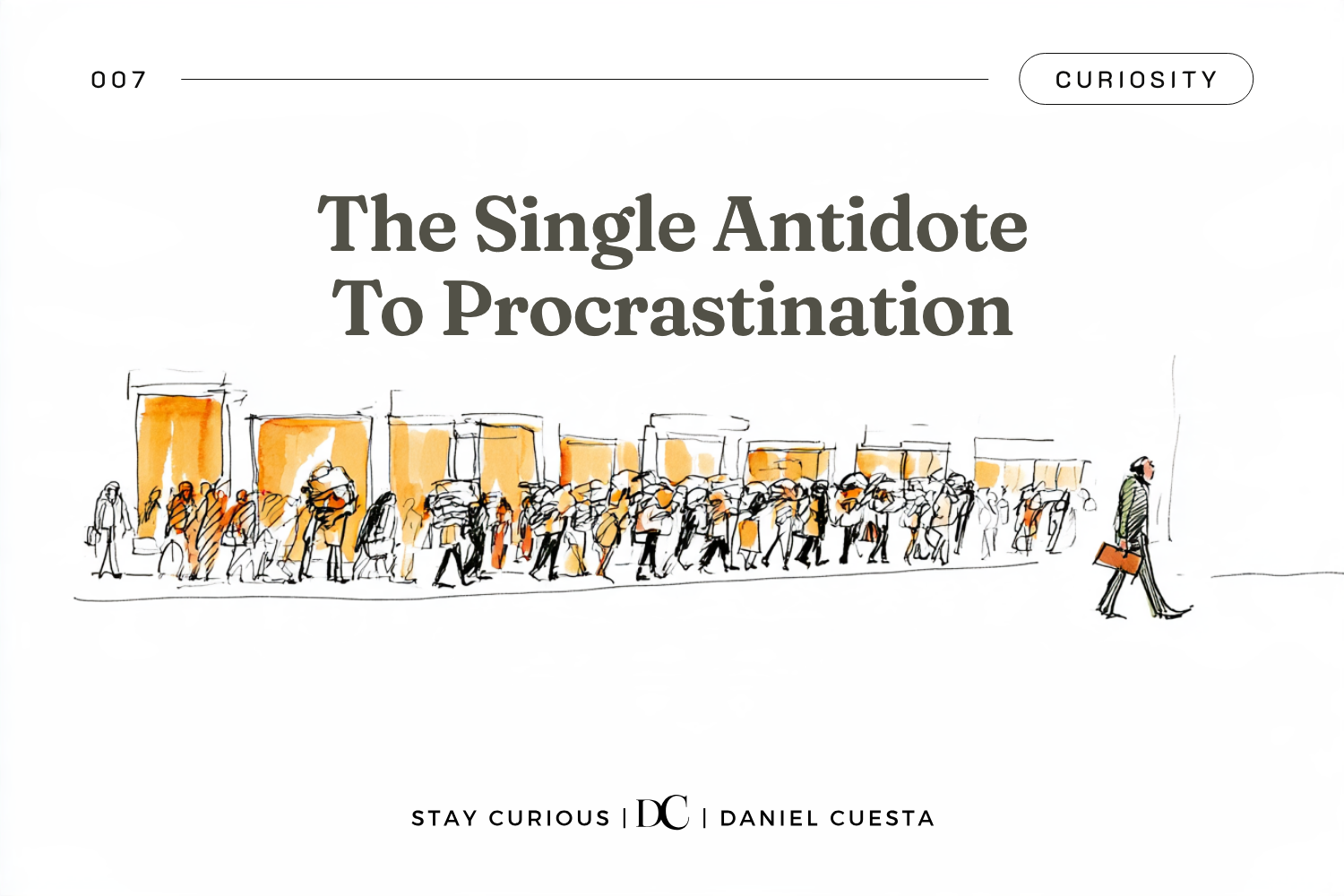
I’ve had this on my mind for some time now, but did you know that Christmas Is Always In December?
I know, I know… Spoilers are the worst. :/
It’s been on the same day in the same month for over 1,600 years, but most of us still wait until the last minute to do our “Christmas Shopping”. I am quite guilty of this myself and have, in recent years, been working to get better, plotting my elaborate scheme to acquire gifts without my family noticing “at least” three weeks in advance.
However, I’ve come to realize that even this strategy is flawed, and that there really is no great way to cover all your bases when you wait until the last minute to do it all. The core danger here is a threat that extends beyond the holiday season and bleeds into other aspects of our lives:
We tend to procrastinate what’s good for us while indulging in what fades… Why?
Because we are afraid of getting it wrong, not measuring up, or creating a greater mess. So instead, we momentarily put it on the back burner without realizing that when we do this with all the important things in our life, it’s WE who are on the burner, overcooked, and burnt out.
So what do we do about this? How do we overcome that fear and instead use procrastination to our advantage, not our detriment?
Simple: We sweep it off its feet by attacking its cause, not its symptoms.
In other words, we must engage in preventive measures to avert its onset and attack its source.
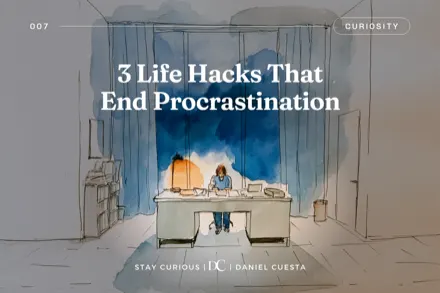
Around this time last year, I wrote and published an article titled 3 Life HACKS That End Procrastination where I explained the three tenets to get things done while enjoying the process, first coined by successful author and entrepreneur Ali Abdaal.
While these principles led to significant behavioral changes in my routine as deadlines and end-of-year numbers approached, over the past few months, I had forgotten these tenets, and thought that revisiting the idea of procrastination would be useful, but this time, analyzing it through a new lens, specifically what happens before it hits and what to do to prevent it.
See, although we all know, from a rational sense, that unless we address an issue at its source, any work to mitigate it will only delay the time until it recurs, we still spend most of our days, months, or even years addressing issues that have already arisen. This could be said is one of the greatest tragedies
Similarly, we try to address the problem of procrastination at its head, not at its root. We are good at diagnosing the symptoms of the problem, properly labeling it “procrastination,” but forget to take it a step further to treat the causes.
If we start at the actual beginning, then we realize that before you started “putting something off,” you had a reason to do it; that distinct reason is typically FEAR.
This leads back to what we discussed at the beginning: putting things off because we feel afraid of getting it wrong, not measuring up, or creating a greater mess. However, if we take it even one step further and ask ourselves, “Why is it that we think this?” we realize it’s all due to:
A lack of clarity.
It’s when our perception of things is dubious that we fear taking them on. It’s when the uncertainty surrounding a project makes it seem too big that we put it off. It’s when the haze engulfing the report is too thick that we can’t see through it that we prefer to put it off rather than venture into the fog.
See, when you know what’s going to happen, then it becomes a lot harder to worry about something you know that won’t. When you know what to do, you aren’t scared about how to do it. When you know where you’re going, you have a guide to get you going and keep you on track. It’s then that the fear has no hold.
This, in many ways, is quite simple; it begins by making the end specific. This might look like choosing what to write about, what resource to use, who’s going to help you, when it’s due, the tone you will use, etc. It’s almost like clarifying the end in order to find the beginning, because it really is hard to get there if you don’t know where you’re going. And it’s hard to take the first step when you don’t know where to start.
That right there, ladies and gentlemen, is why we procrastinate. A lack of clarity, muddled by fear, labeled as procrastination. Its the freaking Russian Nesting Doll of our productivity. We think we’re getting one thing, only to find several reasons underneath.
Now, this is great; we know how to deal with procrastination by cutting it off at its source and facing the fear by finding clarity for our end goal. However, the question now becomes how to continuously fend it off so that it doesn’t come back. How do we kill this giant permanently?
Good news, you already have the tools to do this too, see it’s the same system we just explored, but applied again to this new dip:
- Face the fear by finding he uncertainty.
- Then clear it up.
- Finally, repeat.
This idea is what I like to call the principle of the Emerging Path.
It’s when you get somewhere by continuously course correcting because you have your end goal clear, even when you lose sight of it. And that’s okay because sometimes we just can’t see through the entire fog, but we can see just enough for one step, then another, and another, until we reach our goals, look back, and see how far we’ve come.
What I’ve found is that if we are intentional in implementing the aforementioned system, then this part always takes care of itself.
This system will always work because we don’t know what we don’t know, and that scares us. But we won’t know it until we try to figure it out. That’s clarity. The only way to figure it out is by starting the trek towards the clear flag you’ve planted. That’s repeating the process till you get the job done.
Basic? Sure, but Nike is worth BILLIONS. Just Do It, right?

—
I have never been more convinced than I am now that we are all natural procrastinators. Big time “I’ll do it later” people and Oscar-winning “last minute deadline” makers. If we weren’t, discipline would be commonplace, and consistency would be the standard.
Given this reality, we must either choose to work with these tendencies for the better or be subject to them, and the only way to do that is by confronting procrastination before it starts.
To do that, attack it at its source, fear. To fend off fear, take its antidote, clarity, and to find clarity, embark on the path and tease out the idea piece by piece, contend with it, wrestle with it, and take it down.
This short-term fight will yield an exponential reward beyond understanding down the line, so here’s to facing our fears, not procrastinating, and remembering that Christmas Is Always In December.
(Might want to try today’s insight by getting a head start on that shoppin ;)
— Making The Most Of Being Curious
Daniel J. Cuesta
Share this letterPair this letter with a cup from Addisuna Coffee Co.
P.S. Interestingly, I had procrastinated writing this article for some time, as I knew I would include the idea that “Christmas is always in December,” but I hadn’t yet figured out how to incorporate it. How did I overcome that? Two ways, one by first understanding the essence of what I was trying to say, “do it now, not later,” then translating that into simple language, saying “Oh, this is procrastination”. That was facing the fear in order to find clarity.
Secondly, I implemented the principle of the emerging path and actually started writing the article. Once there was a bit of metaphorical ink on paper, the rest began to flow more naturally, and every step followed from there. I thought it was worth sharing that implementing the contents of this article was what led to its writing.

~ Wednesdays Of Wisdom ~
W.O.W Sources
Importance of Clarity: Where there is no vision, the people perish. - Proverbs 29:18
Fear Is NOT Normal: For God gave us a spirit not of fear but of power and love and self-control. - 2 Timothy 1:7
Inside The Mind Of A Master Procrastinator: Link
Britannica, “ Why Is Christmas in December?”: Link
1,441 words
Links in this piece
Wednesdays Of Wisdom · danielcuesta007.com