Letter No. 111 · Resilience & Growth · The Archive
You Have Permission To Change
Life's Only Constant Is Change. (Pt. 1)
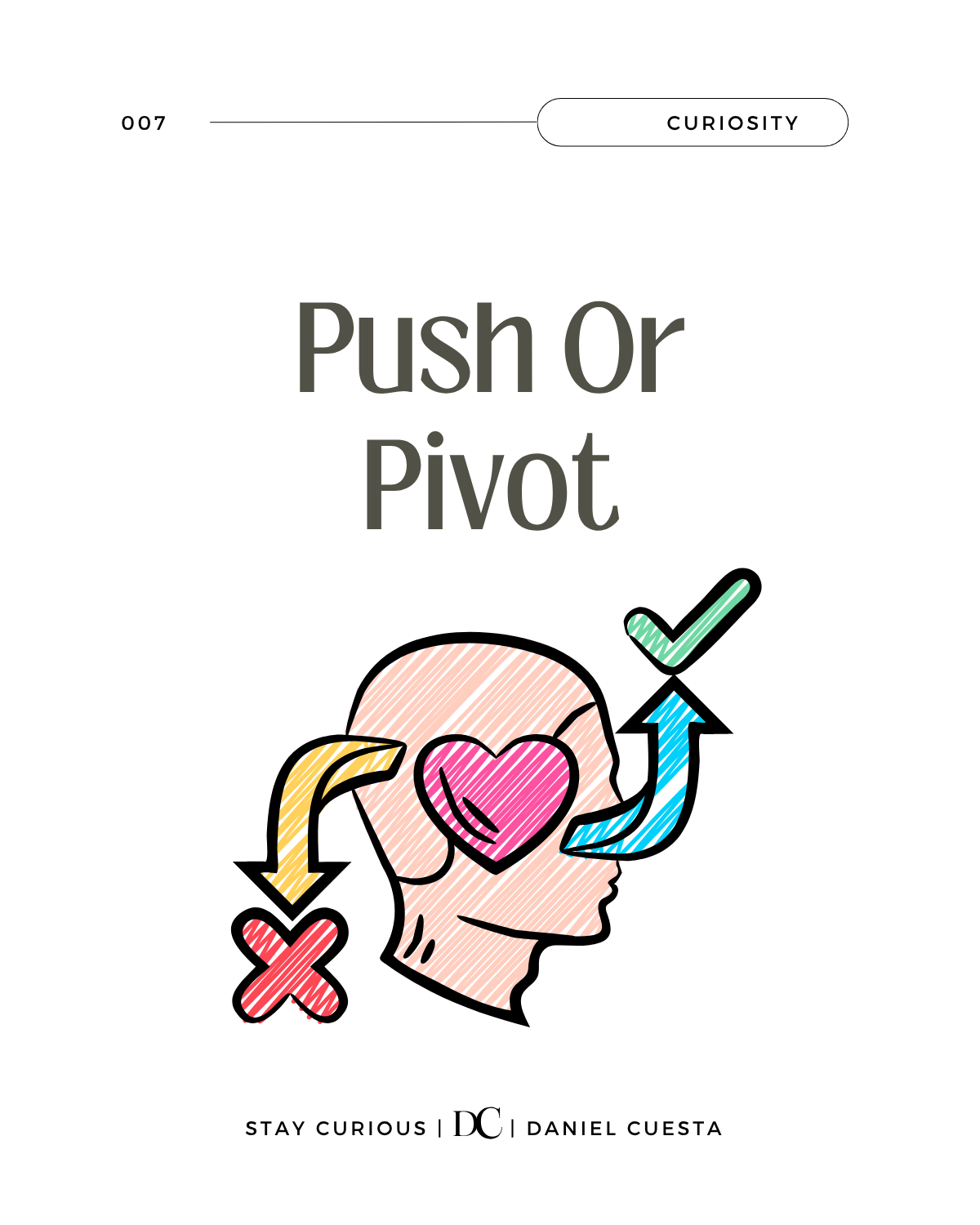
Quitting is a sensitive subject. It often feels like giving up. To others, it almost always looks like failing. But knowing when and how to quit is the difference between discipline and stubbornness.
It’s many times harder to quit than it is to keep going; that’s why we stay stuck in old ways, partaking in habitual unfruitful patterns, and loop-de-loops of familiar doom. We would rather face a comfortable hell than an unknown heaven.
Over the following three articles, I will introduce you to three life filters that have personally helped me better navigate moments of difficult decision-making in a more calculated and precise manner. They are simple and yet effective, and while they will not solve your problems, they will provide you with the perspective you need to make decisions with peace rather than regret.
Push Or Pivot. Life isn’t perfect (surprise!), at least not according to our own self-set standards.
When what’s before us starts to vary from the plans we had in our head, our anxieties creep in, and our worries run away with themselves. But this mindset is rigid and unhelpful. On the other hand, when we realize and accept that life’s only constant** IS **change, we’ll be one step closer to knowing we don’t have to be subject to our circumstances and that we have the power to do something about them.
With this in mind, all decisions then boil down to one of two categories: either a call to push through, or a sign to pivot. Think back on any single one of your recent choices: when faced with a difficult problem or hiccup, you came to a crossroads; one side read “keep going,” the other “try something new.”
We should acknowledge that when you do choose to “try something new,” you are indeed “quitting” what you had been doing before, as every “yes” is a “no” to something else (and vice versa), but in the face of change, that’s not the same as “giving up.” And here is where this article’s lesson truly lies. Regardless of whether you decide to strive onward or correct course, the only bad decision you could take is giving in to passivity while giving up on yourself and your calling.
In other words, exploring a new path or sharpening your current approach are two assets at your disposal in writing this story we call life; as long as you don’t give up and do your part, you will find that God will always do his (no matter how mysterious it may be).
It should, though, be noted that oftentimes a “push” is seen as commendable; it’s called grit, dedication, and discipline. But when you should realign and instead you hit the gas pedal, that’s not virtue; it’s stupidity. On the other hand, when you should have stayed and stuck it out, and instead you run away, that’s not adapting; that’s being a coward or lazy and quitting on your calling. The beauty is found in the bravery of the in-between: seeking out wisdom and knowing when to push and when to pivot.
Furthermore, when we understand that every life choice is one of these two reframes, we suddenly free ourselves from both the internal pressure associated with change and the external accusations of failure. This is absolutely liberating, and in doing so we release ourselves from the prison of popularity; suddenly it no longer matters what verdict the court of public opinion provides when you remember your only responsibility is the account you give God and not them.
Isn’t it strange how we are expected to be the same people we’ve always been while the rest of the world is expected to innovate? When people say “you’ve changed,” they don’t often mean it as a compliment, but it’s true; we do evolve and adapt. When you marry someone, you marry who they are now and who you believe they will become in the life you build together. It’s the same with a friendship; through thick and thin, you are choosing to get to know the human being they are now and who they are aiming to be. Why would we ever think our relationship with ourselves would be any different? Who you are today is not who you were before, and is only slightly similar to who you will be in the future. This isn’t a bad thing; it’s only a life thing.
If no one has said it to you before, remember that we all have permission to change for the better.
—
Give yourself a chance; you’ll never know if you never try. Stick it out when it gets hard and remember to adapt when needed. Learn to put your pride to the side when God asks you to try something new and stick it out when he asks you to stay faithful.
Very much like the Chameleon Principle, it’s about adapting with intention, not passivity. It’s about changing as a form of reorientation towards your Future Self rather than succumbing to the numbing noise that is the way “it’s always been done.” This new lens will not solve your problems, but it will allow you to analyze your decisions through a different P3rSp3ctiv3 that will reveal their deeper meanings and ramifications, while giving you the permission you need to make decisions with peace, even in the face of uncertainty.
This week I challenge you to confront a choice you have been putting off. Decide whether it’s a call to push or pivot. And then do it.
- Making The Most Of Being Curious
Daniel J. Cuesta
~ Wednesdays Of Wisdom ~
Sources:
Permission To Change, The Power Of A Pivot: The prudent sees danger and hides himself, but the simple go on and suffer for it. - Proverbs 22: 3
Who We Were Yesterday Is Not Who We Are Today: When I was a child, I spoke like a child, I thought like a child, I reasoned like a child. When I became a man, I gave up childish ways.
- 1st Corinthians 13:11
Our Plans vs. God’s Purposes: Many are the plans in the mind of a man, but it is the purpose of the LORD that will stand. - Proverbs 19:21
Ask For The Wisdom You Need To Know When To Push Or Pivot: If any of you lacks wisdom, let him ask God, who gives generously to all without reproach, and it will be given him. - James 1:5 (ESV)
1,077 words
Links in this piece
Wednesdays Of Wisdom · danielcuesta007.com